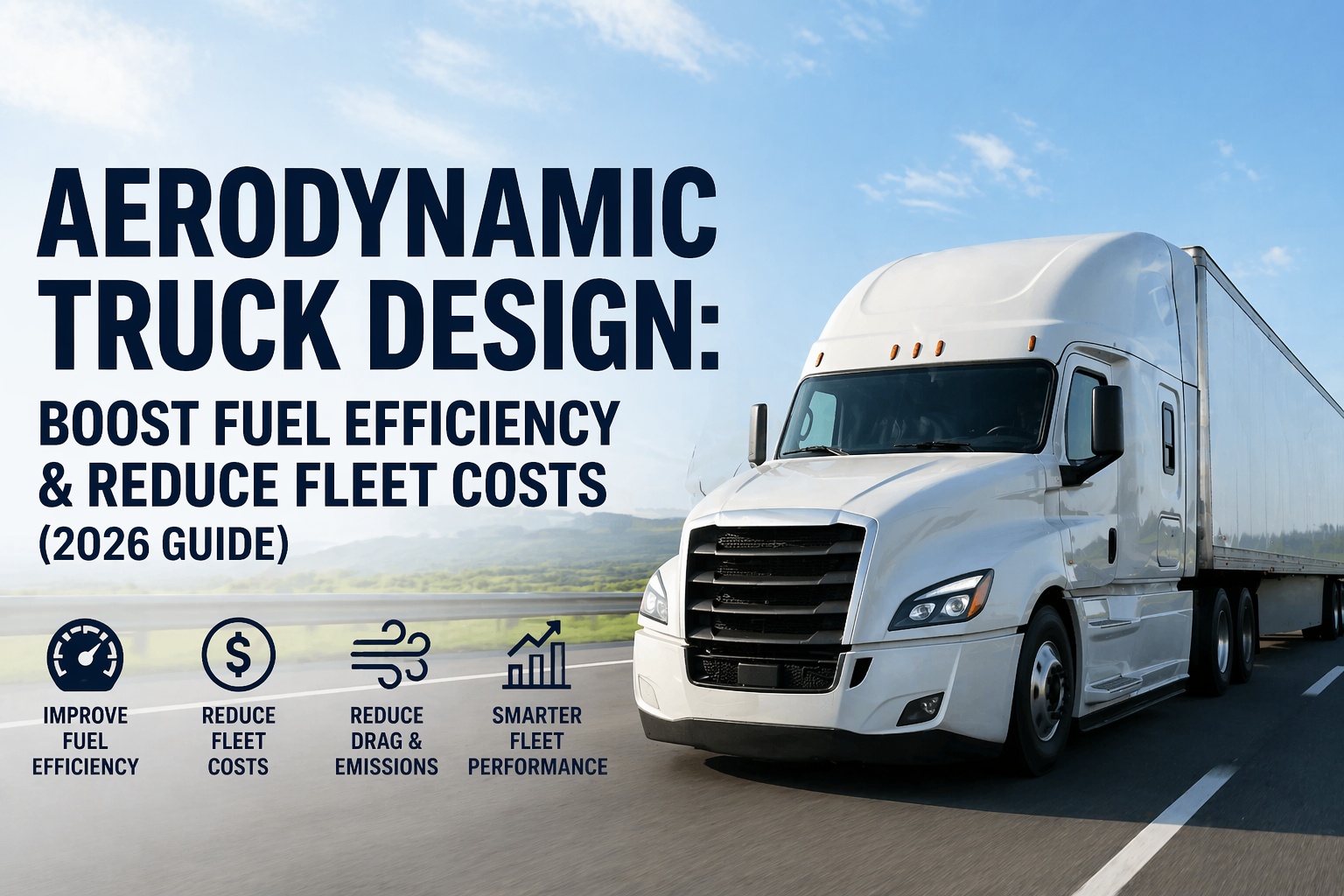
Eight out of ten fleet professionals now run GPS fleet tracking — up 11 percentage points year-over-year — and the numbers behind that adoption surge tell the story. Fleets using modern telematics report 30–40% efficiency improvements, 12% reductions in fuel and labor costs, 19% lower accident costs, and 15% lower maintenance spend. For a 50-truck operation, that translates to roughly $750,000–$1.2M in annual savings, with most fleets recovering their full system investment in under 12 months.
Telematics in 2026 is no longer about watching dots move on a map. Modern systems combine real-time GPS, engine diagnostics via CAN-bus, driver behavior monitoring, AI-powered video telematics, predictive maintenance alerts, and route optimization — all flowing into one dashboard that turns raw vehicle data into operational decisions. Fleets that wait for "later" are losing roughly 14% of annual revenue to preventable issues their competitors are already catching automatically.
This guide breaks down exactly how telematics works, the core features every fleet should look for, real-world ROI by category, the implementation roadmap, and how telematics integrates with your maintenance and inspection workflows. Start your free trial to see how telematics data flows directly into your fleet management dashboard.
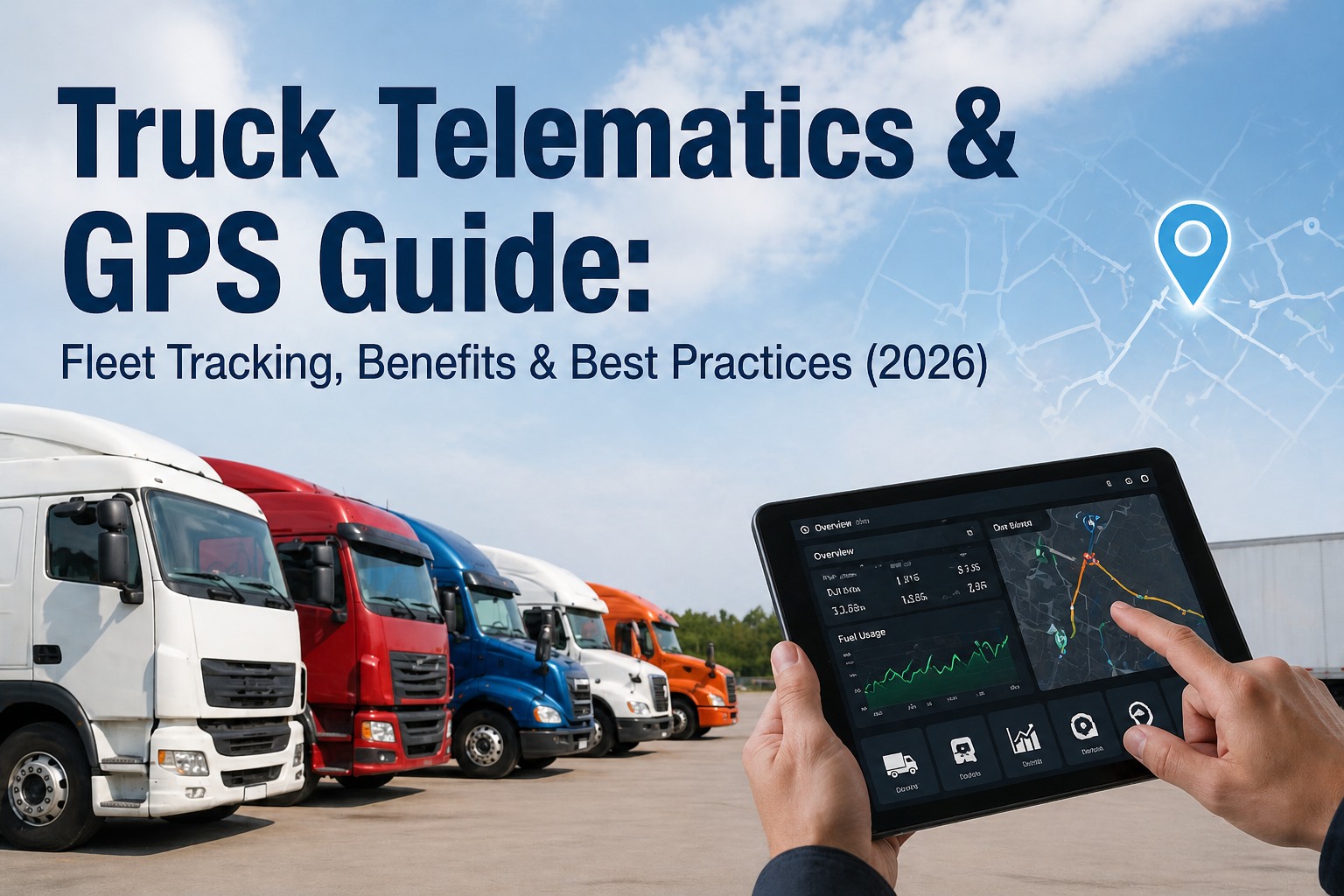
Truck Telematics & GPS Guide: Fleet Tracking, Benefits & Best Practices (2026)
From dots-on-a-map to data-driven decisions. The complete 2026 playbook for choosing, deploying, and scaling fleet telematics — with ROI math fleets actually achieve.
Quick Answer: What Is Fleet Telematics?
Fleet telematics is the convergence of telecommunications and informatics — a technology system that collects vehicle data through onboard sensors, GPS, and CAN-bus integration, transmits it via cellular networks (4G/LTE or 5G), and processes it on cloud platforms to give fleet managers real-time visibility into location, driver behavior, engine health, fuel efficiency, and route performance. Modern telematics systems go beyond simple GPS tracking to support predictive maintenance, AI-powered video safety, geofencing, electronic logging (ELD), and integration with maintenance management software.
How Telematics Works: The 4-Layer Stack
Every modern telematics system runs on the same architectural foundation — four layers that turn raw vehicle signals into actionable decisions. Understanding this stack helps you evaluate vendors, troubleshoot issues, and integrate telematics with your other fleet systems. Contact our support team to see how this stack integrates with your maintenance management workflow.
10 Core Telematics Capabilities
Not every system delivers every feature, and the gap between basic GPS tracking and full-stack telematics is enormous. Here are the ten capabilities every modern fleet platform should support — and the operational wins each one unlocks.
The Real ROI: Numbers from 2026 Fleets
The Verizon Connect 2026 Fleet Technology Trends Report surveyed 830 fleet professionals — here are the cost reductions GPS users report after implementation. Sign up free for 3 trucks to see how these numbers map to your fleet.
Telematics Tier Comparison
Telematics platforms range from sub-$15/month basic GPS dongles to fully integrated $50+/month enterprise platforms. Match the tier to your operation — paying for features you won't use is as wasteful as missing features that pay for themselves.
| Capability | Basic GPS | Standard Telematics | Full-Stack Platform |
|---|---|---|---|
| Real-time GPS tracking | ✓ | ✓ | ✓ |
| Geofencing | Limited | ✓ | ✓ |
| Engine diagnostics (CAN-bus) | — | ✓ | ✓ |
| Driver behavior scoring | — | ✓ | ✓ |
| ELD & HOS compliance | — | ✓ | ✓ |
| AI video telematics | — | Optional | ✓ |
| Predictive maintenance alerts | — | — | ✓ |
| Maintenance / DVIR integration | — | — | ✓ |
| Route optimization (AI) | — | Optional | ✓ |
| Typical cost/truck/month | $10–15 | $25–35 | $40–55 |
| Best for | Small ops, theft prevention | Mid-market mixed fleets | Mature fleets, enterprise |
5-Step Implementation Roadmap
Most fleets achieve full ROI within 60–90 days of complete deployment — when they follow a structured rollout. Skipping steps creates the "dashboard graveyard" effect: paid platforms generating data nobody uses. Talk to our support team for a phased rollout plan tailored to your fleet.
Best Practices & Common Pitfalls
The difference between fleets seeing 6:1 ROI and fleets watching $30/truck/month leak away is execution. Here are the patterns that separate successful telematics deployments from expensive failures.
Frequently Asked Questions
Most fleets see meaningful ROI within 60–90 days of complete deployment, with full first-year ROI ranging from 3:1 to 6:1. The fastest gains come from idle reduction (visible in week one), route optimization (week two), and accident prevention (depends on incident frequency). Sign up free to start tracking baseline KPIs you'll measure ROI against.
Yes — when implemented as a coaching tool rather than punitive surveillance. Industry research shows 71% of video telematics fleets cite driver safety as the primary win. Drivers appreciate exoneration evidence in not-at-fault incidents (false claim protection saves fleets millions), and recognition programs tied to safety scores actually improve retention.
Absolutely. Major telematics platforms support virtually every Class 8 OEM (Freightliner, Peterbilt, Kenworth, International, Volvo, Mack) plus medium-duty and light-duty trucks. Hardware connects via standard OBD-II ports or 9-pin diagnostic connectors. Contact our support team to confirm compatibility with your specific fleet mix.
GPS tracking shows location only — where the truck is. Telematics combines GPS with engine diagnostics, driver behavior, fuel data, ELD compliance, and increasingly AI-powered video. Think of GPS as the foundation and telematics as the full house built on it. Most modern fleets need telematics, not just GPS — the additional capabilities pay for themselves quickly.
For most fleets running over 25 vehicles, yes. Adoption hit 46% in 2026, and 74% of users report measurable safety improvements. Beyond accident reduction, video telematics provides exoneration evidence in 57% of disputed claims, often saving the entire system cost in a single false-claim defense. Smaller fleets typically start with GPS + behavior monitoring and add video at year 2.
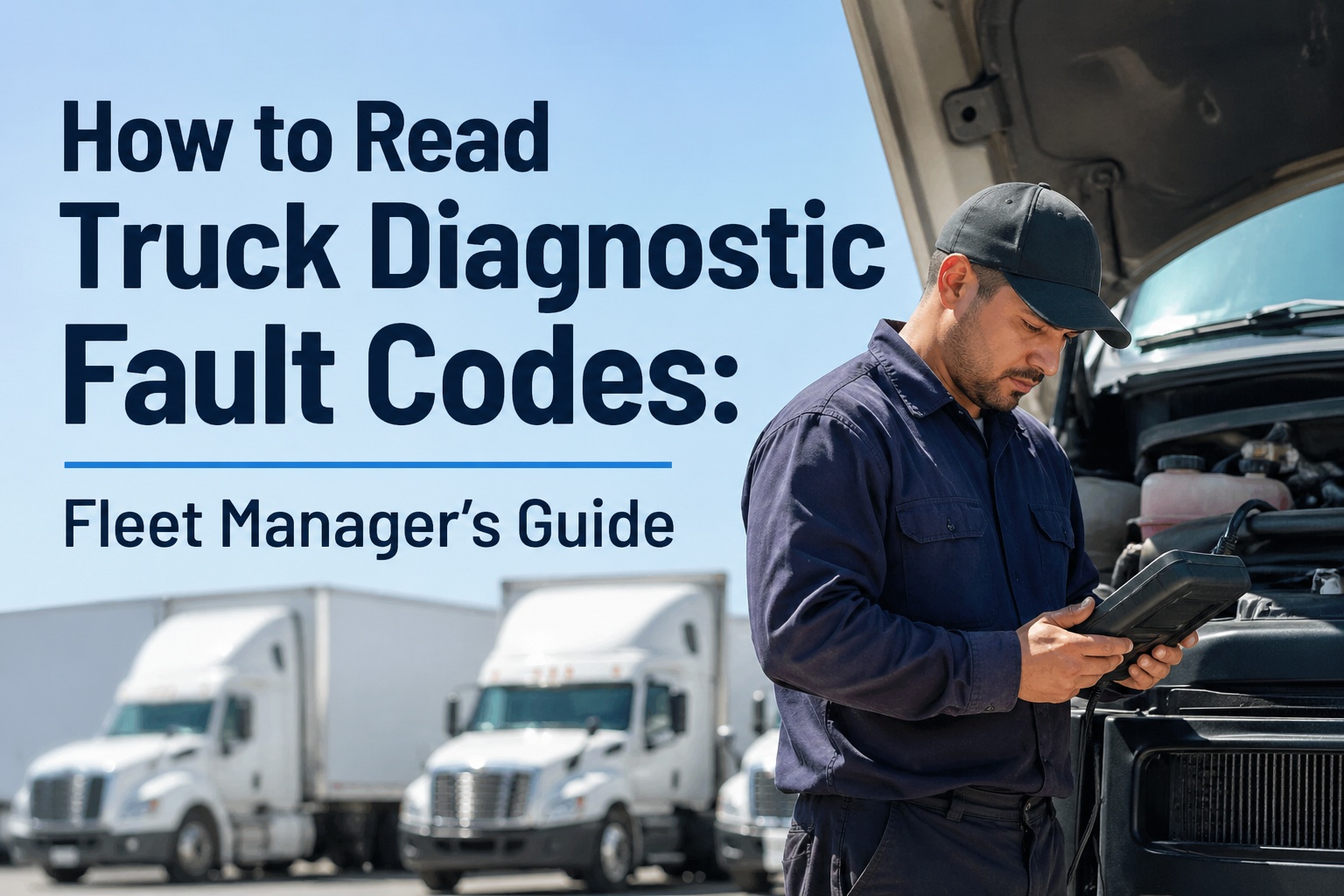
Tightly — and this integration is where the biggest ROI hides. Engine fault codes from telematics auto-create work orders. Odometer readings sync continuously to PM schedules. DVIR defects link to telematics-recorded incidents. The unified data flow eliminates manual entry, prevents missed services, and creates the audit trail that protects warranty coverage. Start your free trial to see how telematics integrates directly with your maintenance dashboard.
Run Telematics + Maintenance In One Platform
Real-time GPS, engine diagnostics, driver scores, predictive alerts — all flowing into the same dashboard as your DVIRs, work orders, and PM schedules. See how 500+ fleets cut costs, prevent breakdowns, and prove ROI to leadership.