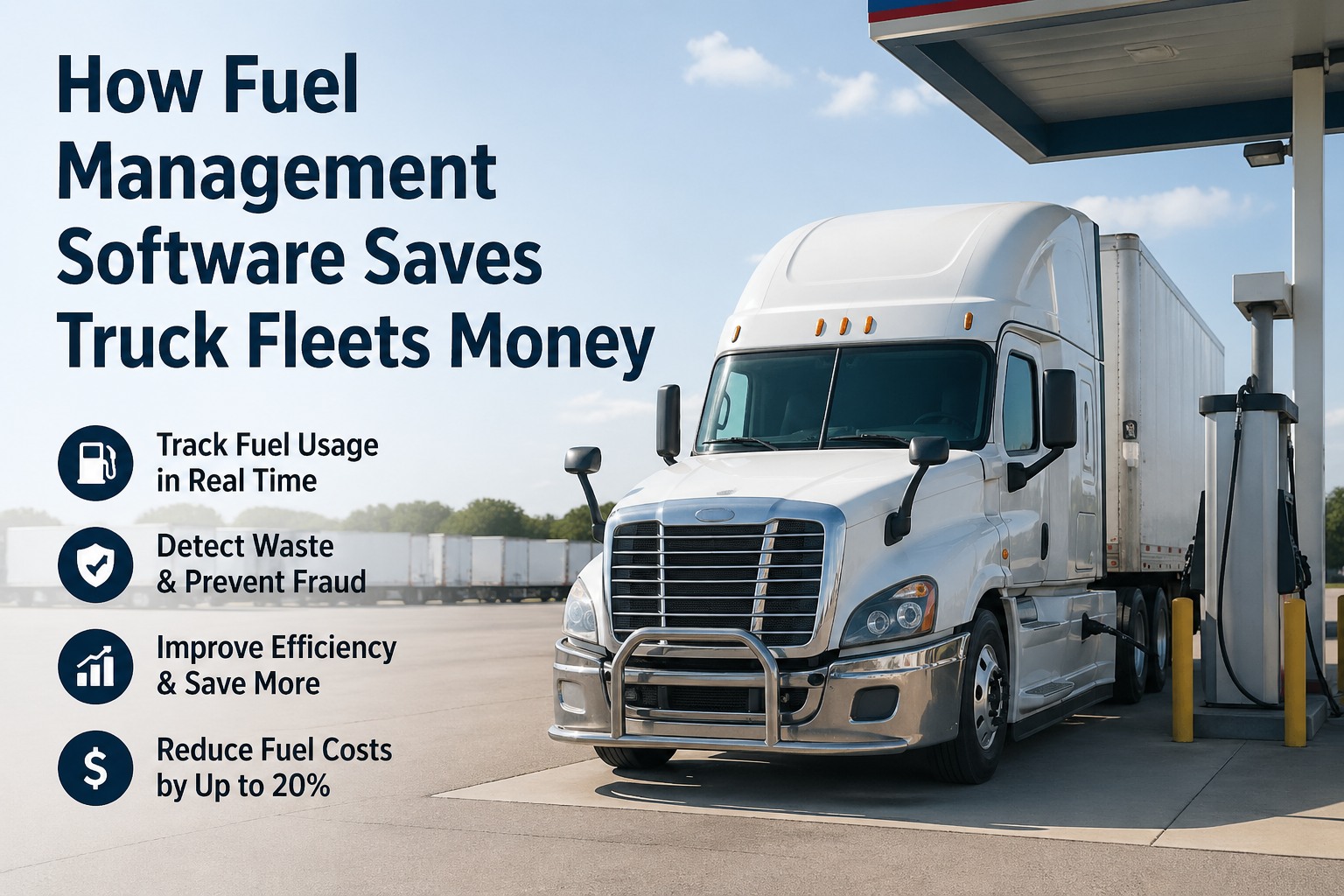
Right now, somewhere in your fleet, fuel is leaking — not from a tank, but from a budget. Industry data confirms 6-15% of every fleet fuel dollar disappears to theft, fraud, and waste before a single mile is driven. For a 20-vehicle fleet spending $400,000 annually on fuel, that's $24,000 to $60,000 vanishing every year — invisible until quarterly reconciliation, by which point it's already gone. With fuel eating 30-40% of total fleet operating costs, this isn't a rounding error. It's the difference between profit and loss. Fuel management software exposes every leak in real time, automates theft detection, and recovers 10-25% of total fuel spend within 90 days. Talk to our team to map exactly where your fleet's fuel dollars are going.
Where Your Fuel Dollars Actually Vanish
Most fleet managers track fuel purchases. Almost none track where the money disappears between the pump and the road. Software exposes the four invisible drains that paper-based tracking guarantees you'll never catch:
Theft & Siphoning
Overnight tank drops. Drivers fueling personal vehicles. Buddy fueling at unauthorized stations. The biggest single drain on most fleet budgets — and the easiest to catch with real-time tank sensors.
Excessive Idling
Trucks burn 0.8 gallons per hour idling. Across a 50-truck fleet, even 30 minutes of unnecessary idle daily wastes $25,000+ annually. Mostly invisible without GPS-tracked engine state.
Inefficient Driver Behavior
Hard acceleration, speeding, harsh braking. The bottom 20% of drivers waste 15-30% more fuel than the top 20%. Coaching alone improves fleet MPG by 8-12%.
Card Fraud & Mismatched Transactions
Card used 200 miles from any vehicle. Fill-up exceeding tank capacity. Ghost transactions that match no truck's GPS. 14% of fleet payments are lost to fraud or theft industry-wide in 2025.
Combined, these four leaks drain 14-35% of total fuel spend on an unmonitored fleet. Fuel management software is the only realistic way to plug them all simultaneously.
The 6 Core Capabilities That Drive ROI
Not all fuel software delivers equal results. The platforms achieving 55-83x ROI share six specific capabilities. Anything missing from this list is a tracking spreadsheet with extra steps:
Real-Time Tank Monitoring
Continuous tank-level sensors with 99.5% accuracy. Catches leaks, theft, and abnormal usage within seconds of occurrence — not weeks later in reconciliation.
Fuel Card Integration
Auto-imports transactions from WEX, Comdata, Fuelman. Cross-references every charge against GPS location and tank-level change. Auto-declines suspicious transactions.
GPS-Verified Transactions
Every fuel transaction matched to live vehicle GPS. Card charged in Phoenix while truck shows in El Paso? Manager notified within 60 seconds with location-mismatch evidence.
Idle Time Tracking
Distinguishes productive idle (PTO, HVAC in extreme weather) from waste. Tracks by driver, location, and duration. Alerts when thresholds exceeded — fair and context-aware coaching.
Driver MPG Scorecards
Ranks drivers by fuel efficiency on comparable routes. Targeted coaching for bottom 20% of performers. The act of measurement alone drives 60-70% of behavior savings.
Maintenance-Linked Analytics
Connects fuel data to vehicle health. Consumption spike of 34% on a comparable route signals theft, mechanical issue, or behavior change — investigated before it compounds.
Real Theft Detection — What the Software Catches
Modern AI fuel monitoring catches theft within 5-10 seconds of occurrence. Here are five real-world detection scenarios that paper tracking will never catch in time:
Tank Capacity Exceeded
Transaction logs 87 gallons. Vehicle tank capacity: 70 gallons. AI flags transaction within seconds — not 30 days later when the statement arrives.
Location Mismatch
Fuel card charged in Phoenix. Vehicle GPS shows truck in El Paso. Unauthorized card use detected immediately. Manager alerted in 60 seconds.
Overnight Siphoning
Tank-level sensor shows 40% drop overnight. No fuel card transaction recorded. Possible siphoning event — alert fires with vehicle location and time window.
Late-Night Pattern
Multiple transactions at 11pm-2am for same vehicle over two weeks. Pattern flagged for review — normal operations don't require repeated late-night fills.
Consumption Anomaly
Vehicle showing consumption 34% above its 90-day baseline on comparable routes. Could indicate theft, mechanical issue, or behavior change — investigated before it compounds.
Stop fuel leaks before they drain another quarter
Truck Inspection & Maintenance unifies fuel card transactions, GPS data, and tank-level monitoring in one platform. Real-time theft alerts, driver MPG scorecards, idle tracking, and IFTA automation. Free for up to 3 vehicles. Sign up free to see your first savings within 30 days.
Real Savings by Fleet Size
The math compounds across fleet size, but the percentages stay consistent. Here's exactly what fleets recover within the first 12 months of fuel management software deployment:
Calculation basis: Industry-average 6-15% theft loss + 4-7.5% behavior-driven savings. Software cost at $3/vehicle/month = $360 annual cost for a 10-truck fleet. Single prevented theft incident typically pays for an entire year.
Documented Fleet Success Stories
Real fleets, real numbers. Here's what fleet operators recovered within their first year of deploying fuel management software:
How to Choose the Right Software
Not every fuel platform fits every fleet. Use this checklist to filter the noise from real ROI-delivering platforms:
Real-time alerts (not weekly reports)
If theft alerts arrive in your inbox a week later, the money is gone. Look for sub-60-second notification windows.
Multi-source data correlation
GPS + fuel card + tank-level data unified. Single-source platforms miss the cross-reference checks that catch fraud.
Driver MPG scorecards
Behavior change drives 60-70% of total savings. Without per-driver visibility, coaching is impossible.
Existing-fleet integration
Works with your current telematics, fuel cards, and trucks. No rip-and-replace. No proprietary hardware lock-in.
Free trial or starter tier
Real platforms let you prove ROI before committing. Avoid vendors requiring 12-month contracts to start.
Maintenance-linked insights
Fuel data should connect to vehicle health. Consumption anomalies often signal mechanical issues weeks before breakdowns.
Frequently Asked Questions
How much can fuel management software actually save?
Most fleets see 10-25% total fuel cost reduction within 90 days. For a 50-truck fleet spending $1M annually on fuel, that's $100,000-$250,000 recovered through theft prevention, idle reduction, route optimization, and driver coaching. Single prevented theft incidents typically pay for an entire year of software cost. Contact our specialists for a fleet-specific savings projection.
How does the software detect fuel theft?
AI cross-references three data sources: real-time tank-level sensors, fuel card transactions, and GPS vehicle location. When data sources don't align — transaction without vehicle present, fill exceeding capacity, or tank drop without recorded transaction — alerts fire within 5-10 seconds. Modern systems achieve 95%+ measurement accuracy and sub-5% false positive rates after the initial 2-4 week learning period.
Will it integrate with my existing fuel cards and telematics?
Yes. Major fuel card providers (WEX, Comdata, Fuelman) and telematics platforms (Geotab, Samsara, Motive, Verizon Connect) support auto-import of transaction data. The software matches card transactions with GPS data automatically — no manual reconciliation required. Most fleets keep their existing fuel cards and telematics; the software adds the unified analytics layer on top.
How quickly will I see ROI?
Most fleets achieve positive ROI within 90 days. The first prevented theft incident or identified idling pattern often pays for an entire year of software cost. By month 3, behavior-driven MPG improvements become measurable. By month 6, total fuel costs typically drop 10-25%. Sign up free to start measuring savings on your first 3 vehicles immediately.
Is fuel management software worth it for small fleets?
Often the highest proportional ROI. For a 10-vehicle fleet, a single prevented theft event ($1,500+ all-in cost) typically covers more than a year of software. Small fleets feel each loss more acutely. Truck Inspection & Maintenance is free for up to 3 vehicles and starts at $3/vehicle/month after that — a 10-truck fleet pays $360/year and typically recovers $20,000-$45,000.
Do I need to install hardware on every truck?
Not always. Many predictive systems work with existing OBD-II/J1939 ports and telematics already installed. Tank-level sensors add value for theft detection on high-risk fleets but aren't required for fuel card fraud detection or driver MPG tracking. Talk to our team to assess what your fleet already has and what would deliver fastest ROI.
Every quarter without fuel software costs you another $5K-$30K per 10 trucks.
Truck Inspection & Maintenance unifies fuel cards, GPS, tank monitoring, driver scorecards, and theft detection in one platform. Real-time alerts. 90-day ROI. Free for up to 3 vehicles. Your first prevented theft event typically pays for an entire year.